

What are Measures?
Measures are aggregated computations performed on specific columns within your model. They are used to derive insightful metrics, often serving as the foundation for more complex analytical structures. Measures can range from simple sums or averages to intricate calculations utilizing various dimensions, conditions, and data transformations.How to Define Measures
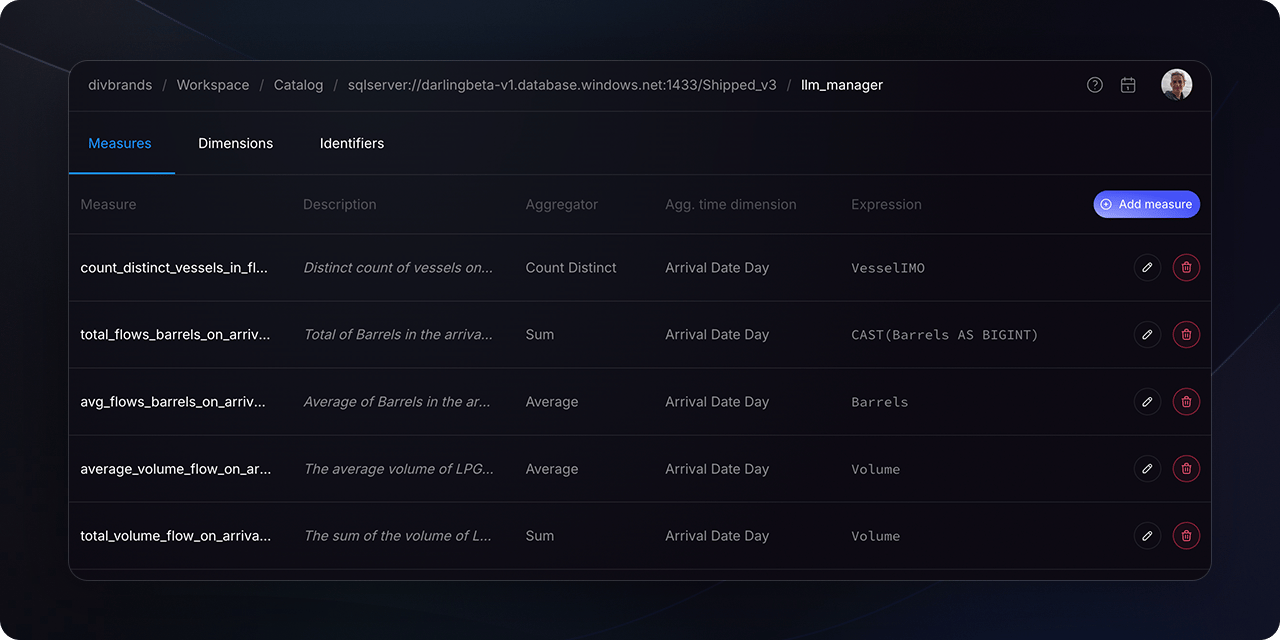
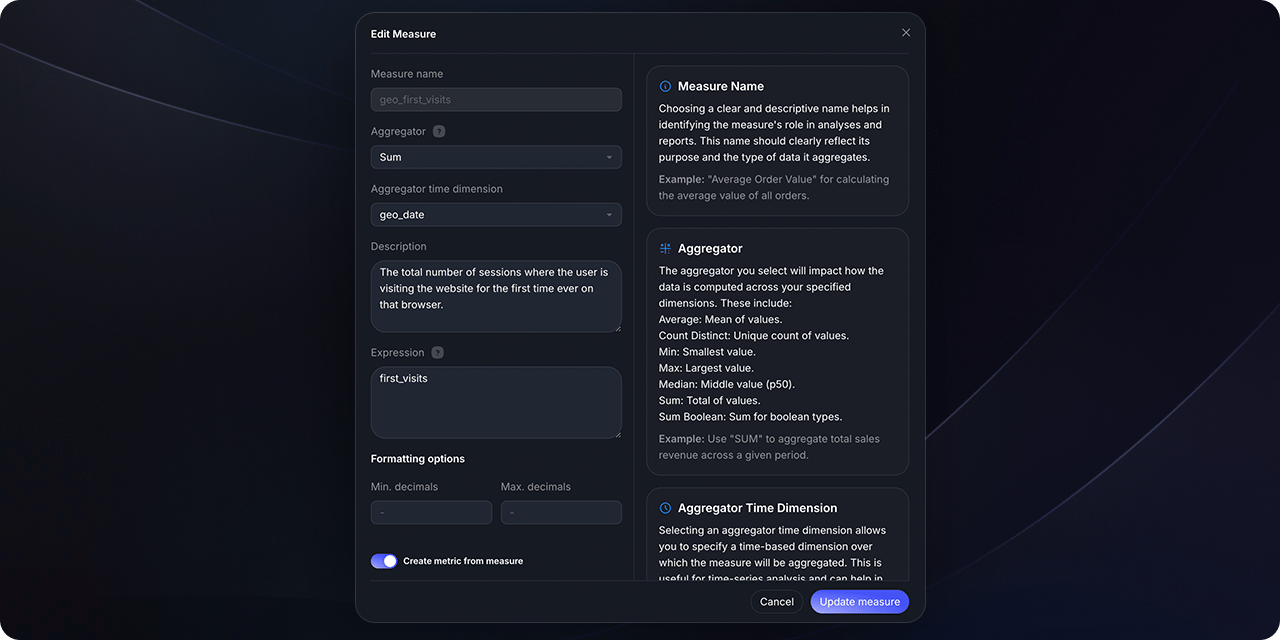
When defining a measure, you should be familiar with several key parameters:Name
A unique identifier for the measure, distinct across all semantic models in
your project.
Description
A human-readable explanation of the calculated measure.
Aggregator
Specifies the aggregation type to be applied (e.g., sum, average, max,
etc.).
Expression (expr)
References an existing column or provides a SQL expression for a new/derived
column.
How to create and edit a measure
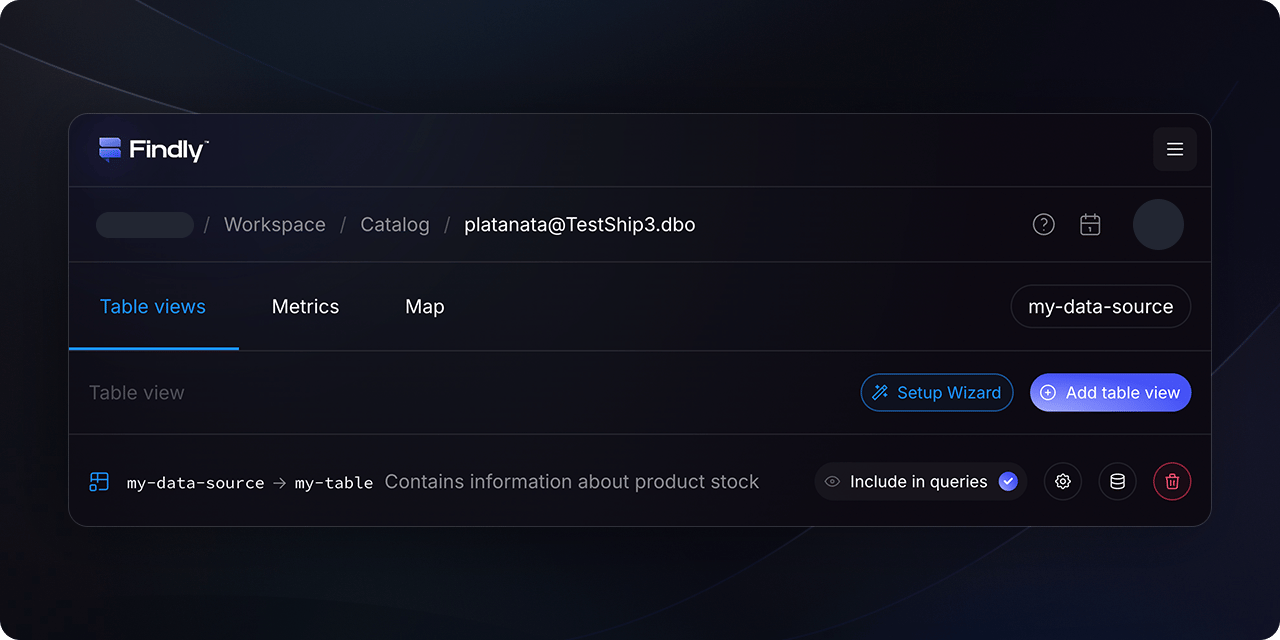
In the Catalog section, select the table for which you want to configure a measure. Then, navigate to theMeasures tab.
Specification for Measures
Measures are defined using the following structure:Supported Aggregations
Darling supports a rich set of aggregation types to cater to diverse data analysis needs:- Basic Aggregations
- Advanced Aggregations
Basic aggregations provide elementary mathematical operations on data.
sum: Total of values.min: Smallest value.max: Largest value.average: Mean of values.
When creating measures, ensure that the data types and SQL functions are
compatible with your specific data platform’s capabilities, as these can vary.
Wrapping Up
Measures are pivotal for deriving insights from your data through metrics. By understanding and effectively utilizing measures, you can generate more valuable and accurate metrics for your analyses.FAQ: Are measures dependent on dimensions?
FAQ: Are measures dependent on dimensions?
While measures often utilize dimensions for their calculations, they are not
strictly dependent on them. However, when applying filters or other conditions
based on dimensions, it’s essential to ensure the correct relationships and
joins are maintained for accurate results.